mirror of
https://github.com/c3lang/c3c.git
synced 2026-02-27 03:51:18 +00:00
 9c42919e5a
* Add scripts to install c3
* Install script support debian binaries
---------

Co-authored-by: Christoffer Lerno <christoffer@aegik.com>
553 lines
25 KiB
Markdown
553 lines
25 KiB
Markdown
# C3 Language
|
|
|
|
C3 is a programming language that builds on the syntax and semantics of the C language,
|
|
with the goal of evolving it while still retaining familiarity for C programmers.
|
|
|
|
It's an evolution, not a revolution: the C-like
|
|
for programmers who like C.
|
|
|
|
Precompiled binaries for the following operating systems are available:
|
|
|
|
- Windows x64 [download](https://github.com/c3lang/c3c/releases/download/latest-prerelease/c3-windows.zip), [install instructions](#installing-on-windows-with-precompiled-binaries).
|
|
- Debian x64 [download](https://github.com/c3lang/c3c/releases/download/latest-prerelease/c3-linux.tar.gz), [install instructions](#installing-on-debian-with-precompiled-binaries).
|
|
- Ubuntu x86 [download](https://github.com/c3lang/c3c/releases/download/latest-prerelease/c3-ubuntu-20.tar.gz), [install instructions](#installing-on-ubuntu-with-precompiled-binaries).
|
|
- MacOS Arm64 [download](https://github.com/c3lang/c3c/releases/download/latest-prerelease/c3-macos.zip), [install instructions](#installing-on-macos-with-precompiled-binaries).
|
|
- OpenBSD x64 [download](https://github.com/c3lang/c3c/releases/download/latest-prerelease/c3-openbsd.tar.gz), [install instructions](#installing-on-openbsd-with-precompiled-binaries).
|
|
|
|
The manual for C3 can be found at [www.c3-lang.org](http://www.c3-lang.org).
|
|
|
|

|
|
|
|
Thanks to full ABI compatibility with C, it's possible to mix C and C3 in the same project with no effort. As a demonstration, vkQuake was compiled with a small portion of the code converted to C3 and compiled with the c3c compiler. (The aging fork can be found at https://github.com/c3lang/vkQuake)
|
|
|
|
A non-curated list of user written projects and other resources can be found [here](https://github.com/c3lang/c3-showcase).
|
|
|
|
### Design Principles
|
|
- Procedural "get things done"-type of language.
|
|
- Try to stay close to C - only change what's really necessary.
|
|
- C ABI compatibility and excellent C integration.
|
|
- Learning C3 should be easy for a C programmer.
|
|
- Data is inert.
|
|
- Avoid "big ideas" & the "more is better" fallacy.
|
|
- Introduce some higher level conveniences where the value is great.
|
|
|
|
C3 owes its inspiration to the [C2 language](http://c2lang.org): to iterate on top of C without trying to be a
|
|
whole new language.
|
|
|
|
### Example code
|
|
|
|
The following code shows [generic modules](https://c3-lang.org/generic-programming/generics/) (more examples can be found at https://c3-lang.org/language-overview/examples/).
|
|
|
|
```cpp
|
|
module stack {Type};
|
|
// Above: the parameterized type is applied to the entire module.
|
|
|
|
struct Stack
|
|
{
|
|
usz capacity;
|
|
usz size;
|
|
Type* elems;
|
|
}
|
|
|
|
// The type methods offers dot syntax calls,
|
|
// so this function can either be called
|
|
// Stack.push(&my_stack, ...) or
|
|
// my_stack.push(...)
|
|
fn void Stack.push(Stack* this, Type element)
|
|
{
|
|
if (this.capacity == this.size)
|
|
{
|
|
this.capacity *= 2;
|
|
if (this.capacity < 16) this.capacity = 16;
|
|
this.elems = realloc(this.elems, Type.sizeof * this.capacity);
|
|
}
|
|
this.elems[this.size++] = element;
|
|
}
|
|
|
|
fn Type Stack.pop(Stack* this)
|
|
{
|
|
assert(this.size > 0);
|
|
return this.elems[--this.size];
|
|
}
|
|
|
|
fn bool Stack.empty(Stack* this)
|
|
{
|
|
return !this.size;
|
|
}
|
|
```
|
|
|
|
Testing it out:
|
|
|
|
```cpp
|
|
import stack;
|
|
|
|
// Define our new types, the first will implicitly create
|
|
// a complete copy of the entire Stack module with "Type" set to "int"
|
|
alias IntStack = Stack {int};
|
|
// The second creates another copy with "Type" set to "double"
|
|
alias DoubleStack = Stack {double};
|
|
|
|
// If we had added "alias IntStack2 = Stack {int}"
|
|
// no additional copy would have been made (since we already
|
|
// have an parameterization of Stack {int} so it would
|
|
// be same as declaring IntStack2 an alias of IntStack
|
|
|
|
// Importing an external C function is straightforward
|
|
// here is an example of importing libc's printf:
|
|
extern fn int printf(char* format, ...);
|
|
|
|
fn void main()
|
|
{
|
|
IntStack stack;
|
|
// Note that C3 uses zero initialization by default
|
|
// so the above is equivalent to IntStack stack = {};
|
|
|
|
stack.push(1);
|
|
// The above can also be written IntStack.push(&stack, 1);
|
|
|
|
stack.push(2);
|
|
|
|
// Prints pop: 2
|
|
printf("pop: %d\n", stack.pop());
|
|
// Prints pop: 1
|
|
printf("pop: %d\n", stack.pop());
|
|
|
|
DoubleStack dstack;
|
|
dstack.push(2.3);
|
|
dstack.push(3.141);
|
|
dstack.push(1.1235);
|
|
// Prints pop: 1.123500
|
|
printf("pop: %f\n", dstack.pop());
|
|
}
|
|
```
|
|
|
|
### In what ways does C3 differ from C?
|
|
|
|
- No mandatory header files
|
|
- New semantic macro system
|
|
- Module based name spacing
|
|
- Slices
|
|
- Operator overloading
|
|
- Compile time reflection
|
|
- Enhanced compile time execution
|
|
- Generics based on generic modules
|
|
- "Result"-based zero overhead error handling
|
|
- Defer
|
|
- Value methods
|
|
- Associated enum data
|
|
- No preprocessor
|
|
- Less undefined behaviour and added runtime checks in "safe" mode
|
|
- Limited operator overloading to enable userland dynamic arrays
|
|
- Optional pre and post conditions
|
|
|
|
### Current status
|
|
|
|
The current stable version of the compiler is **version 0.7.5**.
|
|
|
|
The upcoming 0.7.x releases will focus on expanding the standard library,
|
|
fixing bugs and improving compile time analysis.
|
|
Follow the issues [here](https://github.com/c3lang/c3c/issues).
|
|
|
|
If you have suggestions on how to improve the language, either [file an issue](https://github.com/c3lang/c3c/issues)
|
|
or discuss C3 on its dedicated Discord: [https://discord.gg/qN76R87](https://discord.gg/qN76R87).
|
|
|
|
The compiler is currently verified to compile on Linux, Windows and MacOS.
|
|
|
|
**Support matrix**
|
|
|
|
| Platform | Native C3 compiler available? | Target supported | Stack trace | Threads | Sockets | Inline asm |
|
|
|--------------------------|-------------------------------|-------------------------|-------------|----------|----------|------------|
|
|
| Win32 x64 | Yes | Yes + cross compilation | Yes | Yes | Yes | Yes* |
|
|
| Win32 Aarch64 | Untested | Untested | Untested | Untested | Untested | Yes* |
|
|
| MacOS x64 | Yes | Yes + cross compilation | Yes | Yes | Yes | Yes* |
|
|
| MacOS Aarch64 | Yes | Yes + cross compilation | Yes | Yes | Yes | Yes* |
|
|
| iOS Aarch64 | No | Untested | Untested | Yes | Yes | Yes* |
|
|
| Linux x86 | Yes | Yes | Yes | Yes | Yes | Yes* |
|
|
| Linux x64 | Yes | Yes | Yes | Yes | Yes | Yes* |
|
|
| Linux Aarch64 | Yes | Yes | Yes | Yes | Yes | Yes* |
|
|
| Linux Riscv32 | Yes | Yes | Yes | Yes | Yes | Untested |
|
|
| Linux Riscv64 | Yes | Yes | Yes | Yes | Yes | Untested |
|
|
| ELF freestanding x86 | No | Untested | No | No | No | Yes* |
|
|
| ELF freestanding x64 | No | Untested | No | No | No | Yes* |
|
|
| ELF freestanding Aarch64 | No | Untested | No | No | No | Yes* |
|
|
| ELF freestanding Riscv64 | No | Untested | No | No | No | Untested |
|
|
| ELF freestanding Riscv32 | No | Untested | No | No | No | Untested |
|
|
| FreeBSD x86 | Untested | Untested | No | Yes | Untested | Yes* |
|
|
| FreeBSD x64 | Untested | Untested | No | Yes | Untested | Yes* |
|
|
| NetBSD x86 | Untested | Untested | No | Yes | Untested | Yes* |
|
|
| NetBSD x64 | Untested | Untested | No | Yes | Untested | Yes* |
|
|
| OpenBSD x86 | Untested | Untested | No | Yes | Untested | Yes* |
|
|
| OpenBSD x64 | Yes* | Yes | Yes* | Yes | Untested | Yes* |
|
|
| MCU x86 | No | Untested | No | No | No | Yes* |
|
|
| Wasm32 | No | Yes | No | No | No | No |
|
|
| Wasm64 | No | Untested | No | No | No | No |
|
|
|
|
*\* Inline asm is still a work in progress*<br>
|
|
*\* OpenBSD 7.7 is the only tested version*<br>
|
|
*\* OpenBSD has limited stacktrace, needs to be tested further*
|
|
|
|
More platforms will be supported in the future.
|
|
|
|
#### What can you help with?
|
|
|
|
- If you wish to contribute with ideas, please file issues or discuss on Discord.
|
|
- Interested in contributing to the stdlib? Please get in touch on Discord.
|
|
- Compilation instructions for other Linux and Unix variants are appreciated.
|
|
- Would you like to contribute bindings to some library? It would be nice to have support for SDL, Raylib and more.
|
|
- Build something with C3 and show it off and give feedback. The language is still open for significant tweaks.
|
|
- Start work on the C -> C3 converter which takes C code and does a "best effort" to translate it to C3. The first version only needs to work on C headers.
|
|
- Do you have some specific area you have deep knowledge of and could help make C3 even better at doing? File or comment on issues.
|
|
|
|
### Installing
|
|
|
|
This installs the latest prerelease build, as opposed to the latest released version.
|
|
|
|
#### Installing on Windows with precompiled binaries
|
|
1. Download the zip file: [https://github.com/c3lang/c3c/releases/download/latest-prerelease/c3-windows.zip](https://github.com/c3lang/c3c/releases/download/latest-prerelease/c3-windows.zip)
|
|
(debug version [here](https://github.com/c3lang/c3c/releases/download/latest-prerelease/c3-windows-debug.zip))
|
|
2. Unzip exe and standard lib.
|
|
3. If you don't have Visual Studio 17 installed you can either do so, or run the `msvc_build_libraries.py` Python script which will download the necessary files to compile on Windows.
|
|
4. Run `c3c.exe`.
|
|
|
|
#### Installing on Windows with the install script
|
|
|
|
Open a PowerShell terminal (you may need to run it as an administrator) and run the following command:
|
|
```bash
|
|
iwr -useb https://raw.githubusercontent.com/c3lang/c3c/refs/heads/master/install/install.ps1 | iex
|
|
```
|
|
The script will inform you once the installation is successful and add the `~/.c3` directory to your PATH, which will allow you to run the c3c command from any location.
|
|
|
|
You can choose another version with option `C3_VERSION`.
|
|
For example, you can force the installation of the 0.7.4 version:
|
|
```bash
|
|
$env:C3_VERSION='0.7.4'; powershell -ExecutionPolicy Bypass -Command "iwr -useb https://raw.githubusercontent.com/c3lang/c3c/refs/heads/master/install/install.ps1 | iex"
|
|
```
|
|
|
|
If you don't have Visual Studio 17 installed you can either do so, or run the `msvc_build_libraries.py` Python script which will download the necessary files to compile on Windows.
|
|
|
|
|
|
#### Installing on Debian with precompiled binaries
|
|
1. Download tar file: [https://github.com/c3lang/c3c/releases/download/latest-prerelease/c3-linux.tar.gz](https://github.com/c3lang/c3c/releases/download/latest-prerelease/c3-linux.tar.gz)
|
|
(debug version [here](https://github.com/c3lang/c3c/releases/download/latest-prerelease/c3-linux-debug.tar.gz))
|
|
2. Unpack executable and standard lib.
|
|
3. Run `./c3c`.
|
|
|
|
#### Installing on Debian with the install script
|
|
|
|
Open a terminal and run the following command:
|
|
```bash
|
|
curl -fsSL https://raw.githubusercontent.com/c3lang/c3c/refs/heads/master/install/install.sh | bash
|
|
```
|
|
The C3 compiler will be installed, and the script will also update your ~/.bashrc to include `~/.c3` in your PATH, allowing you to invoke the c3c command from anywhere. You might need to restart your terminal or source your shell for the changes to take effect.
|
|
|
|
You can choose another version with option `C3_VERSION`.
|
|
For example, you can force the installation of the 0.7.4 version:
|
|
```bash
|
|
curl -fsSL https://raw.githubusercontent.com/c3lang/c3c/refs/heads/master/install/install.sh | C3_VERSION=0.7.4 bash
|
|
```
|
|
|
|
#### Installing on Ubuntu with precompiled binaries
|
|
1. Download tar file: [https://github.com/c3lang/c3c/releases/download/latest-prerelease/c3-ubuntu-20.tar.gz](https://github.com/c3lang/c3c/releases/download/latest-prerelease/c3-ubuntu-20.tar.gz)
|
|
(debug version [here](https://github.com/c3lang/c3c/releases/download/latest-prerelease/c3-ubuntu-20-debug.tar.gz))
|
|
2. Unpack executable and standard lib.
|
|
3. Run `./c3c`.
|
|
|
|
#### Installing on MacOS with precompiled binaries
|
|
1. Make sure you have XCode with command line tools installed.
|
|
2. Download the zip file: [https://github.com/c3lang/c3c/releases/download/latest-prerelease/c3-macos.zip](https://github.com/c3lang/c3c/releases/download/latest-prerelease/c3-macos.zip)
|
|
(debug version [here](https://github.com/c3lang/c3c/releases/download/latest-prerelease/c3-macos-debug.zip))
|
|
3. Unzip executable and standard lib.
|
|
4. Run `./c3c`.
|
|
|
|
(*Note that there is a known issue with debug symbol generation on MacOS 13, see [issue #1086](https://github.com/c3lang/c3c/issues/1086))
|
|
|
|
#### Installing on OpenBSD with precompiled binaries
|
|
1. Download tar file: [https://github.com/c3lang/c3c/releases/download/latest-prerelease/c3-openbsd.tar.gz](https://github.com/c3lang/c3c/releases/download/latest-prerelease/c3-openbsd.tar.gz)
|
|
(debug version [here](https://github.com/c3lang/c3c/releases/download/latest-prerelease/c3-openbsd-debug.tar.gz))
|
|
2. Unpack executable and standard lib.
|
|
3. Run `./c3c`.
|
|
|
|
(*Note that this is specifically for OpenBSD 7.7, running it on any other version is prone to ABI breaks)
|
|
|
|
#### Installing on Arch Linux
|
|
Arch includes c3c in the official 'extra' repo. It can be easily installed the usual way:
|
|
|
|
```sh
|
|
sudo pacman -S c3c
|
|
# or paru -S c3c
|
|
# or yay -S c3c
|
|
# or aura -A c3c
|
|
```
|
|
|
|
There is also an AUR package for the c3c compiler : [c3c-git](https://aur.archlinux.org/packages/c3c-git).
|
|
|
|
You can use your AUR package manager:
|
|
```sh
|
|
paru -S c3c-git
|
|
# or yay -S c3c-git
|
|
# or aura -A c3c-git
|
|
```
|
|
|
|
Or clone it manually:
|
|
```sh
|
|
git clone https://aur.archlinux.org/c3c-git.git
|
|
cd c3c-git
|
|
makepkg -si
|
|
```
|
|
|
|
#### Installing via Nix
|
|
|
|
You can access `c3c` via [flake.nix](./flake.nix), which will contain the latest commit of the compiler. To add `c3c` to your `flake.nix`, do the following:
|
|
```nix
|
|
{
|
|
inputs = {
|
|
nixpkgs.url = "github:nixos/nixpkgs?ref=nixpkgs-unstable";
|
|
flake-utils.url = "github:numtide/flake-utils";
|
|
c3c.url = "github:c3lang/c3c";
|
|
# Those are desired if you don't want to copy extra nixpkgs
|
|
c3c.inputs = {
|
|
nixpkgs.follows = "nixpkgs";
|
|
flake-utils.follows = "flake-utils";
|
|
};
|
|
};
|
|
|
|
outputs = { self, ... } @ inputs: inputs.flake-utils.lib.eachDefaultSystem (system:
|
|
let
|
|
pkgs = import inputs.nixpkgs { inherit system; };
|
|
c3c = inputs.c3c.packages.${system}.c3c;
|
|
in
|
|
{
|
|
devShells.default = pkgs.mkShell {
|
|
buildInputs = [
|
|
pkgs.c3c
|
|
];
|
|
};
|
|
}
|
|
);
|
|
}
|
|
```
|
|
|
|
### Installing on Gentoo
|
|
|
|
`c3c` is available in the [Gentoo GURU overlay](https://wiki.gentoo.org/wiki/Project:GURU).
|
|
|
|
Enable and sync the GURU repository (if not already done):
|
|
|
|
```sh
|
|
sudo eselect repository enable guru
|
|
sudo emaint sync -r guru
|
|
```
|
|
|
|
Install `c3c` with:
|
|
|
|
```sh
|
|
sudo emerge -av dev-lang/c3c
|
|
```
|
|
|
|
* The compiler binary is installed to `/usr/bin/c3c`.
|
|
* The standard library is installed to `/usr/lib/c3`.
|
|
|
|
For Gentoo-specific issues, please use the [Gentoo Bugzilla](https://bugs.gentoo.org/) (Product: *GURU*).
|
|
|
|
#### Building via Docker
|
|
|
|
You can build `c3c` using an Ubuntu container. By default, the script will build through Ubuntu 22.04. You can specify the version by passing the `UBUNTU_VERSION` environment variable.
|
|
|
|
```
|
|
UBUNTU_VERSION=20.04 ./build-with-docker.sh
|
|
```
|
|
|
|
See the `build-with-docker.sh` script for more information on other configurable environment variables.
|
|
|
|
#### Installing on OS X using Homebrew
|
|
|
|
1. Install [Homebrew](https://brew.sh/)
|
|
2. Install LLVM 17+: `brew install llvm`
|
|
3. Install lld: `brew install lld`
|
|
4. Install CMake: `brew install cmake`
|
|
5. Clone the C3C github repository: `git clone https://github.com/c3lang/c3c.git`
|
|
6. Enter the C3C directory `cd c3c`.
|
|
7. Set up CMake build for debug: `cmake -B build -S .`
|
|
8. Build: `cmake --build build`
|
|
9. Change directory to the build directory `cd build`
|
|
|
|
#### Installing on Windows using Scoop
|
|
|
|
c3c is included in 'Main' bucket.
|
|
|
|
```sh
|
|
scoop install c3
|
|
```
|
|
|
|
#### Getting started with a "hello world"
|
|
|
|
Create a `main.c3` file with:
|
|
```c++
|
|
module hello_world;
|
|
import std::io;
|
|
|
|
fn void main()
|
|
{
|
|
io::printn("Hello, world!");
|
|
}
|
|
```
|
|
|
|
Make sure you have the standard libraries at either `../lib/std/` or `/lib/std/`.
|
|
|
|
Then run
|
|
```sh
|
|
c3c compile main.c3
|
|
```
|
|
|
|
The generated binary will by default be named after the module that contains the main
|
|
function. In our case that is `hello_world`, so the resulting binary will be
|
|
called `hello_world` or `hello_world.exe`depending on platform.
|
|
|
|
### Compiling
|
|
|
|
#### Compiling on Windows
|
|
|
|
1. Make sure you have Visual Studio 17 2022 installed or alternatively install the "Buildtools for Visual Studio" (https://aka.ms/vs/17/release/vs_BuildTools.exe) and then select "Desktop development with C++"
|
|
2. Install CMake
|
|
3. Clone the C3C github repository: `git clone https://github.com/c3lang/c3c.git`
|
|
4. Enter the C3C directory: `cd c3c`.
|
|
5. Set up the CMake build: `cmake --preset windows-vs-2022-release`
|
|
6. Build: `cmake --build --preset windows-vs-2022-release`
|
|
|
|
You should now have a `c3c` executable in `build\Release`.
|
|
|
|
You can try it out by running some sample code: `c3c.exe compile ../../resources/examples/hash.c3`
|
|
|
|
Building `c3c` using Visual Studio Code is also supported when using the `CMake Tools` extension. Simply select the `Windows x64 Visual Studio 17 2022` configure preset and build.
|
|
|
|
*Note that if you run into linking issues when building, make sure that you are using the latest version of VS17.*
|
|
|
|
#### Compiling on Windows (Debug)
|
|
|
|
Debug build requires a different set of LLVM libraries to be loaded for which a separate CMake configuration is used to avoid conflicts.
|
|
1. Configure: `cmake --preset windows-vs-2022-debug`
|
|
2. Build: `cmake --build --preset windows-vs-2022-debug`
|
|
|
|
You should now have a `c3c` executable in `build-debug\Debug`.
|
|
|
|
#### Compiling on Ubuntu 24.04 LTS
|
|
|
|
1. Make sure you have a C compiler that handles C11 and a C++ compiler, such as GCC or Clang. Git also needs to be installed.
|
|
2. Install LLVM 18 `sudo apt-get install cmake git clang zlib1g zlib1g-dev libllvm18 llvm llvm-dev llvm-runtime liblld-dev liblld-18 libpolly-18-dev`. If you're using Ubuntu 25.04, also install `libpolly-20-dev`.
|
|
3. Clone the C3C github repository: `git clone https://github.com/c3lang/c3c.git`
|
|
4. Enter the C3C directory `cd c3c`.
|
|
5. Set up CMake build: `cmake -B build -S .`
|
|
6. Build: `cmake --build build`
|
|
7. Change directory to the build directory `cd build`
|
|
|
|
You should now have a `c3c` executable.
|
|
|
|
You can try it out by running some sample code: `./c3c compile ../resources/examples/hash.c3`
|
|
|
|
|
|
#### Compiling on Void Linux
|
|
|
|
1. As root, ensure that all project dependencies are installed: `xbps-install git cmake llvm17 llvm17-devel lld17-devel libcurl-devel ncurses-devel zlib-devel libzstd-devel libxml2-devel`
|
|
2. Clone the C3C repository: `git clone https://github.com/c3lang/c3c.git`
|
|
- If you only need the latest commit, you may want to make a shallow clone instead: `git clone https://github.com/c3lang/c3c.git --depth=1`
|
|
3. Enter the directory: `cd c3c`
|
|
4. Create the CMake build cache: `cmake -B build -S .`
|
|
5. Build: `cmake --build build`
|
|
6. Enter the build directory: `cd build`
|
|
|
|
Your c3c executable should have compiled properly. You may want to test it: `./c3c compile ../resources/examples/hash.c3`
|
|
For a system-wide installation, run the following as root: `cmake --install .`
|
|
|
|
|
|
#### Compiling on Fedora
|
|
|
|
1. Install required project dependencies: `dnf install cmake clang git llvm llvm-devel lld lld-devel ncurses-devel`
|
|
2. Optionally, install additional dependencies: `dnf install libcurl-devel zlib-devel libzstd-devel libxml2-devel libffi-devel`
|
|
3. Clone the C3C repository: `git clone https://github.com/c3lang/c3c.git`
|
|
- If you only need the latest commit, you may want to make a shallow clone: `git clone https://github.com/c3lang/c3c.git --depth=1`
|
|
4. Enter the C3C directory: `cd c3c`
|
|
5. Create the CMake build cache. The Fedora repositories provide `.so` libraries for lld, so you need to set the C3_LINK_DYNAMIC flag: `cmake -B build -S . -DC3_LINK_DYNAMIC=1`
|
|
6. Build the project: `cmake --build build`
|
|
7. Enter the build directory: `cd build`
|
|
|
|
The c3c binary should be created in the build directory. You can try it out by running some sample code: `./c3c compile ../resources/examples/hash.c3`
|
|
|
|
#### Compiling on Arch Linux
|
|
|
|
1. Install required project dependencies: `sudo pacman -S curl lld llvm-libs clang cmake git libedit llvm libxml2`
|
|
2. Clone the C3C repository: `git clone https://github.com/c3lang/c3c.git`
|
|
- If you only need the latest commit, you may want to make a shallow clone: `git clone https://github.com/c3lang/c3c.git --depth=1`
|
|
3. Enter the C3C directory: `cd c3c`
|
|
4. Create the CMake build cache:
|
|
```bash
|
|
cmake -B build \
|
|
-D C3_LINK_DYNAMIC=ON \
|
|
-D CMAKE_BUILD_TYPE=Release
|
|
```
|
|
5. Build the project: `cmake --build build`.
|
|
|
|
After compilation, the `c3c` binary will be located in the `build` directory. You can test it by compiling an example: `./build/c3c compile resources/examples/ls.c3`.
|
|
|
|
6. To install the compiler globally: `sudo cmake --install build`
|
|
|
|
#### Compiling on NixOS
|
|
|
|
1. Enter nix shell, by typing `nix develop` in root directory
|
|
2. Configure cmake via `cmake . -Bbuild $=C3_CMAKE_FLAGS`. Note: passing `C3_CMAKE_FLAGS` is needed in due to generate `compile_commands.json` and find missing libs.
|
|
4. Build it `cmake --build build`
|
|
5. Test it out: `./build/c3c -V`
|
|
6. If you use `clangd` lsp server for your editor, it is recommended to make a symbolic link to `compile_command.json` in the root: `ln -s ./build/compile_commands.json compile_commands.json`
|
|
|
|
#### Compiling on other Linux / Unix variants
|
|
|
|
1. Install CMake.
|
|
2. Install or compile LLVM and LLD *libraries* (version 17+ or higher)
|
|
3. Clone the C3C github repository: `git clone https://github.com/c3lang/c3c.git`
|
|
4. Enter the C3C directory `cd c3c`.
|
|
5. Set up CMake build for debug: `cmake -B build -S .`. At this point you may need to manually
|
|
provide the link path to the LLVM CMake directories, e.g. `cmake -B build -S . -DLLVM_DIR=/usr/local/opt/llvm/lib/cmake/llvm/`
|
|
6. Build: `cmake --build build`
|
|
7. Change directory to the build directory `cd build`
|
|
|
|
*A note on compiling for Linux/Unix/MacOS: to be able to fetch vendor libraries
|
|
libcurl is needed. The CMake script should detect it if it is available. Note that
|
|
this functionality is non-essential and it is perfectly fine to user the compiler without it.*
|
|
|
|
#### Licensing
|
|
|
|
Unless specified otherwise, the code in this repository is MIT licensed.
|
|
The exception is the compiler source code (the source code under `src`),
|
|
which is licensed under LGPL 3.0.
|
|
|
|
This means you are free to use all parts of standard library,
|
|
tests, benchmarks, grammar, examples and so on under the MIT license, including
|
|
using those libraries and tests if your build your own C3 compiler.
|
|
|
|
#### Editor plugins
|
|
|
|
Editor plugins can be found at https://github.com/c3lang/editor-plugins.
|
|
|
|
#### Contributing unit tests
|
|
|
|
1. Write the test, either adding to existing test files in `/test/unit/` or add
|
|
a new file. (If testing the standard library, put it in the `/test/unit/stdlib/` subdirectory).
|
|
2. Make sure that the test functions have the `@test` attribute.
|
|
3. Run tests and see that they pass. (Recommended settings: `c3c compile-test -O0 test/unit`.
|
|
- in this example `test/unit/` is the relative path to the test directory, so adjust as required)
|
|
4. Make a pull request for the new tests.
|
|
|
|
## Thank yous
|
|
|
|
A huge **THANK YOU** goes out to all contributors and sponsors.
|
|
|
|
A special thank you to sponsors [Zack Puhl](https://github.com/NotsoanoNimus) and [konimarti](https://github.com/konimarti) for going the extra mile.
|
|
|
|
And honorable mention goes to past sponsors:
|
|
[Ygor Pontelo](https://github.com/ygorpontelo), [Simone Raimondi](https://github.com/SRaimondi),
|
|
[Jan Válek](https://github.com/jan-valek), [Pierre Curto](https://github.com/pierrec),
|
|
[Caleb-o](https://github.com/Caleb-o) and [devdad](https://github.com/devdad)
|
|
|
|
## Star History
|
|
|
|
[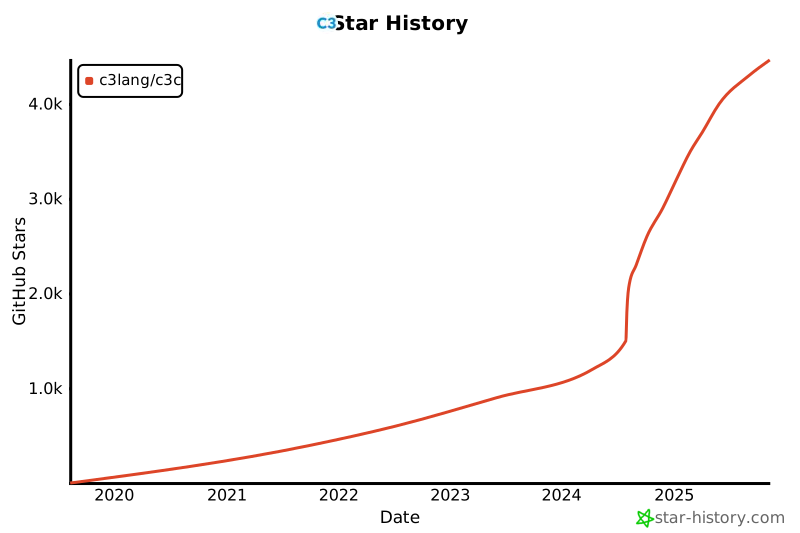](https://www.star-history.com/#c3lang/c3c&Date)
|